Applied AI for infrastructure & enterprise operations · Dubai
Cut waste in the systems your city and company already run.
We build applied AI on the controllers, meters and records you already pay for: traffic signals, cooling plants, water networks, hospital approvals, construction contracts and customs.
Start with a 4-week offline audit (6 weeks in Health) at AED 0 upfront and zero access to your live systems.
A digital twin first, then shadow mode beside the control system already in place.
Custom projects
Your operation
Have a costly recurring bottleneck outside these 11? In a four-week sprint on your own records, at AED 0 upfront, we size the problem and give you a test plan and the number we would sign for a pilot.
The scheduled green opens while the next junction is still full.Green begins after the exit clears. The traffic team compares both timings before authorising a change.
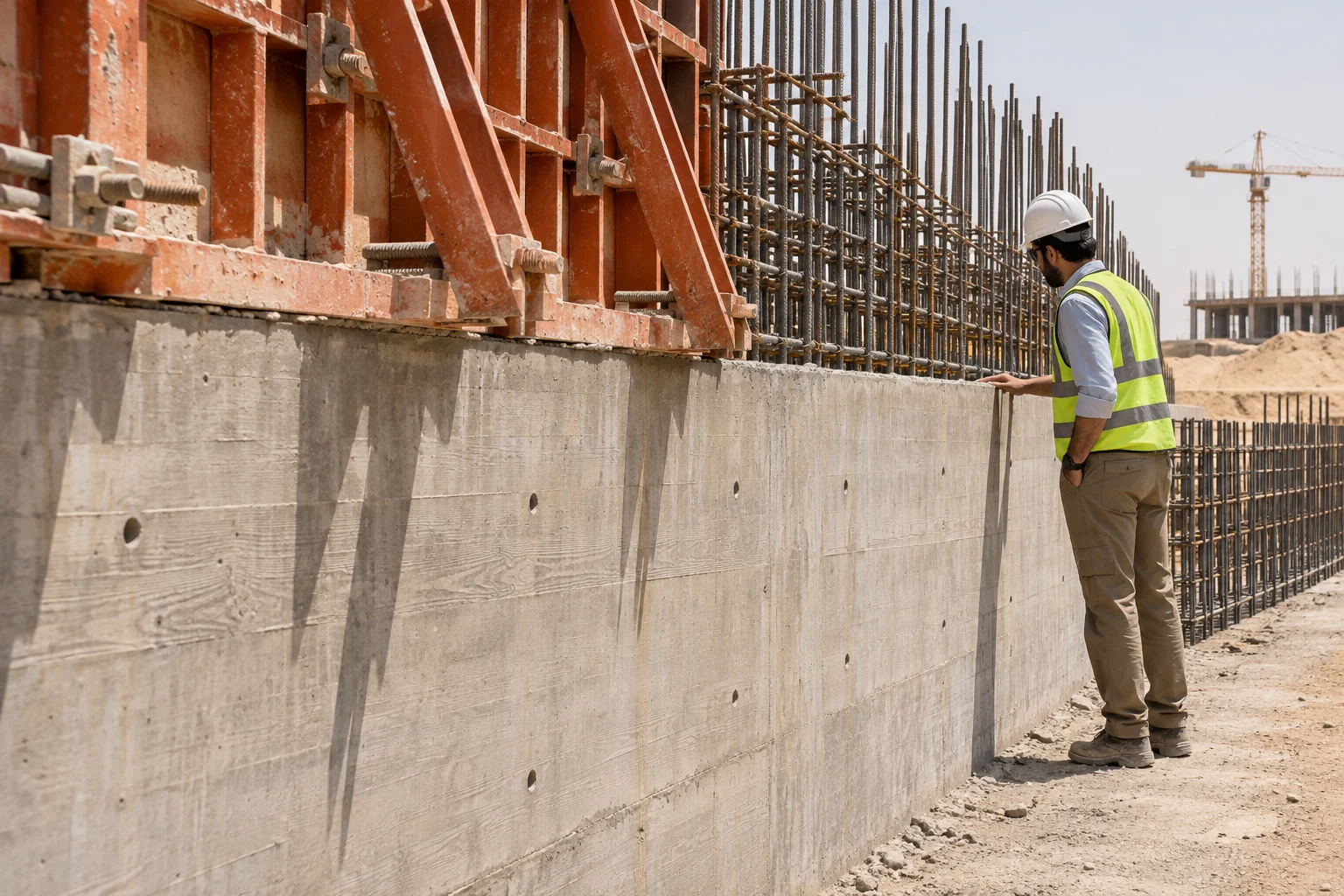
Site Ledger / Construction
Are we paying for the same materials twice?
Rebar paid for on delivery can appear again in the installation claim. Site Ledger flags the line so your quantity surveyor can check the earlier certificate before signing.
Choose one site and the person who makes the call.
02
How we would test it
Together we agree what to measure and compare the proposed change with how that team works today.
03
Evidence to date
Each programme sets out the evidence and the first trial.
04
A first step
Describe one decision your team makes. Download a brief you can share with the person who would run the test.
Company
An applied AI company based in Dubai.
Consultancies sell five-year strategy decks. Model vendors sell generic chat seats. Nodal builds decision software on the equipment and records you already own, proves it offline before anything is switched on, and stays to maintain it.
Where we are
Seven programmes have simulation results that went through internal review: six held up with the wording shown here, and one, Instant Auth, did not pass in full. Four whose first tests did not hold are back in design. The reviews are internal: a separate AI session that did not write the code re-ran each result and tried to break it, and no outside reviewer has checked the figures yet. The next stage for a reviewed programme is a 4-week study on a partner's records, then a shadow pilot on live data.
On your premises or in your private cloud in the UAE. The first sprint needs zero credentials to your live systems.
Source code in escrow
Our proposed terms place the source code in escrow while Nodal maintains the engine.
Your experts keep the decision
Safety limits and the final decision stay with your engineer, clinician, quantity surveyor or customs agent.
Systems and standards the programmes are designed for
BACnet
Modbus
SCADA
UTC-UX Fusion
DHA eClaimLink
Oracle Aconex & Unifier
RIB Candy
SAP & Oracle ERP
Mirsal 2
FIDIC
RSB RD04b/RD10
IPMVP
Design targets, not integrations: nothing has run on a client's live system yet.
Independence
The programmes on this site are Nodal's own, designed from public information. Where a page names an authority or a company, it states a public fact and names its source. Nodal has no agreement with any organisation named here, and none of them has commissioned or endorsed a programme.
For district-cooling providers with chilled-water storage
Today in the UAE
11.39 GW
DEWA's annual peak demand reached 11.39 GW in 2025, 5.83% above 2024 (Dubai Media Office, 10 Feb 2026). Empower alone had about 1.7 million RT of district cooling connected across 1,747 buildings. Electricity in Dubai is billed per kWh by monthly slab, with no charge for peak demand (Executive Council Resolution No. 16 of 2011).
Proof to date
Simulated, internal review
5.2%
In simulation, 28 typical Dubai buildings and two district-cooling districts with storage tanks had a 5.2% lower daily power peak (5.7 MW of 111 MW) than with thermostats fixed at 23 °C, over 16 summer weeks not used for tuning. A tuned timer managed 1.2% (1.3 MW) and was behind in all 16 weeks. From 13:30 to 17:30 the peak was 6.2% lower, against 3.9% for the timer.
How to start
4-week peak-release study · AED 0 upfront
15-minute trends under NDA: plant meters and tank logs from the provider, and BMS trends from building owners who agree. No SCADA or BMS login. The result is a megawatt range per type of summer day. Anything later is on terms agreed after the study.
Limits
The peak is the fleet's total electricity (chillers, fans and equipment), not plant cooling capacity, and the buildings are typical types, not real ones. Nothing has run in a real building.
Recharging moves demand to the evening: 6.0 MW above the 23 °C case on the weekly worst from 17:30 to 22:00 (timer: 2.6 MW), and 15 to 17 MW above it from 22:00 to midnight at worst in four re-run weeks.
The lead over a plant operator's own optimised tank schedule is not proven. Part of the gap to the timer comes from the timer's fixed tank schedule.
Each district is modelled as one agent that controls plant, tank and buildings, which in Dubai are separate parties.
Without the two districts and their tanks, the 28 buildings led the timer by 1.4 to 2.2 points in two re-run weeks.
The 16 weeks were not used for tuning, but an earlier version's results on them shaped the design that was tested.
Total electricity use fell only 0.16%. The contracted-capacity safeguard and measurement on alternating days are plans for a later pilot, not part of the 4-week study.
For a road authority's signal team. In Dubai, signals are run by RTA, with which Nodal has no agreement.
Today in the UAE
About 300 junctions
RTA planned to convert around 300 signalised junctions to its UTC-UX Fusion control system by the third quarter of 2026, and reported 16% to 37% better traffic flow at upgraded junctions on several corridors in the first phase (Dubai Media Office, 4 Sep 2025).
Proof to date
Simulated, internal review
13%
In simulation on four Dubai districts, waiting fell by a median 13% against standard actuated control (20 tests, a clear win in 18) and 45% against a fixed-time plan at its best cycle. Against best-practice actuated control it was level in 19 of 20 tests, with 1% to 4% more stops. Under a simplified central plan, a junction-level reflex changed nothing measurable in 28 of 28 tests.
How to start
4-week corridor twin study · AED 0 upfront
Under NDA: 30 days of detector counts and signal logs, stage diagrams, and intergreen and pedestrian timings for one corridor. No controller login. The authority's engineers keep the calibrated twin. A 60-day shadow run that changes no signal follows on terms agreed after the study.
Limits
Our own queue model: synthetic, uncalibrated demand, two-phase junctions without pedestrian stages and an ideal sensor. It compares controllers. It is not a forecast for Dubai.
Not tested under UTC-UX Fusion, on RTA's data or in a standard microsimulator, and not audited by anyone outside Nodal.
Against best-practice actuated control it is worth nothing measurable, and against standard actuated control the traffic served did not change in 33 of 35 tests.
In a four-phase version tested 9 times, the result against a strong actuated rival ranged from 4.5% less waiting to 0.3% more, and two junctions got worse.
The longest red with a car waiting gets longer: up to 177 seconds against 128 for standard actuated control, inside a 180-second cap that is our own rule, not RTA's.
The fixed-time rival is weak: its best cycle, 40 seconds in most tests, may not fit pedestrian stages.
For main contractors (Commercial Director, Head of QS)
Today in the UAE
28 days to notify
FIDIC 2017 Sub-Clause 20.2.1: a claim not notified within 28 days after the claimant became aware, or should have become aware, of the event is time-barred, unless a late notice is accepted as justified. In Panther v MESC [2022] DIFC CA 016, on an amended FIDIC 1999 contract, the DIFC Court of Appeal treated the notice as a condition precedent to an extension of time. Infrastructure takes 48% of Dubai's AED 99.5 billion budget for 2026.
Proof to date
In design
In design: no simulation figure is published. The offline check reads CSV and Excel exports of one closed subcontract package (from Aconex, Oracle Unifier, RIB Candy or spreadsheets). It is designed to flag duplicate Materials-on-Site claims, signed back-charges not deducted and changes that may start a notice clock. Before any data is opened, you set and sign the target: the share of past notices flagged within 2 working days, under a ceiling on false alarms.
How to start
4-week offline back-test · AED 0 upfront
Exports from one closed project or package: notice and correspondence logs, the variation register, payment applications, and inspection, delivery and back-charge registers. They are read on a machine inside your network and stay there. No live Aconex, Unifier or ERP login. Anything later is on terms agreed after the study.
Limits
Not yet used on any project. An internal test on synthetic records held only on the wording it was tuned on, which is why no figure is published.
It reads structured CSV and Excel exports only, not PDFs, and logs a change only when the export already marks a scope change, a delay or an extension estimate.
Its clock runs from the document date, not from awareness. Where the export does not state the notice period it assumes 14 days, and the 84-day detailed claim is not modelled.
Under FIDIC 2017 a late notice is deemed valid if the Engineer gives no notice within 14 days, and Sub-Clause 20.2.5 allows a justified late submission. Particular conditions may shorten the 28 days.
Panther v MESC (12 May 2023) concerned an amended FIDIC 1999 contract under DIFC law, not FIDIC 2017.
It gives no legal advice. Your contracts team or lawyers decide whether a claim is valid or late and sign every notice, and your quantity surveyor confirms every proposed hold.
More than 44.1 million insurance claims went through Dubai's electronic claims portal in 2023 (Dubai Media Office, 12 Feb 2024). Since 1 January 2013 every provider in Dubai files its claims through DHA's eClaimLink (DHA Circular 35/2012). Abu Dhabi runs a separate platform, Shafafiya. This pre-check is built for eClaimLink.
Proof to date
Simulated, fourth round: not a full pass in review
In simulation, on 32 hospitals new to the system, on top of a hand-kept list of eight payers' rules and assuming conservative reviewers and a payer-requirement problem in one request in ten, its median total-cost score (staff minutes, waiting and wrong rejections, not money) was 20.3 to 20.6. The list alone scored 21.6 to 22.0, and the cheapest comparator fixed in advance 20.8 to 21.1. It sent 52 to 54 requests in 100 to manual review, against 68 to 69 for the list. The internal review's verdict: not a full pass.
How to start
6-week retrospective study · AED 0 upfront
Past prior-approval requests and payer replies from one specialty, three to six months, with the dated index of documents in your record, read on a server inside your network. No write access to live records. Anything later is on terms agreed after the study.
Limits
A stronger model that the reviewer built from the same inputs scored 20.5 to 20.7. Had it been fixed in advance, the claim would have failed in 5 of 6 comparisons.
The list alone completed more approvable requests at first pass, 88.0 to 88.5% against 87.1 to 87.6%, and had fewer returns, 8.6 to 9.1 per 100 against 10.3 to 10.6.
With a payer-requirement problem in one request in five, instead of one in ten, and frequent rule changes, the lead was not robust.
At 85% reviewer capacity it was slower than the hospital's own model on the list: 164 to 169 simulated minutes against 160 to 163.
Tested only on top of the full eight-payer list, on outpatient and emergency cases. The weights and the minutes of the score are assumptions of the simulation.
Not in use in any hospital and never run on real patient data. The payer still decides, and a data-sharing agreement and an impact assessment come before any live data.
For hotel and tower owners (CFO, VP Engineering or Facilities)
Today in the UAE
1,747 buildings
Empower alone had 1,747 buildings and about 1.7 million RT of district cooling connected in 2025. For agreements signed since 31 July 2023, RSB regulation RD04b caps the delta-T target at 9 °C. A low delta-T charge needs proof under the RSB protocol that the customer's own system is its sole cause, and at least three months to fix it.
Proof to date
In design
In design: no simulation figure is published. A first simulation on synthetic buildings was reviewed internally and did not pass in full. The design checks every low delta-T and excess-demand charge against your agreement and the RSB rules, and ranks suspected valve faults from night-time flow. Proposed pilot target, signed before any data moves: your engineer confirms on site at least three in four of the suspects we list, and the list is never padded.
How to start
4-week bill and meter audit · AED 0 upfront
12 monthly cooling bills, your Cooling Services Agreement with its annexes, one month of the provider's meter data and 30 days of BMS trends. No hardware and no write access to the BMS. A sample of the list is confirmed on site. Anything later is on terms agreed after the study.
Limits
In simulation a strong engineer's analysis of the same data recovered more delta-T than our list. That is why no figure is published until a fairer test passes.
The first design does not detect bypasses left open in the plant room. Those are checked by hand on site.
In simulation a tuned vendor fault-detection tool met the three-in-four target almost as often. The target shows that our list is reliable, not that it beats such a tool.
Many simulated buildings got a short list or none. With fewer than four suspects listed we report them and do not score the target.
Our reading of each charge against your bills has not been tested on any real bill yet.
Any later pump tuning needs your chief engineer's approval. Fixed rules outside the AI restore your settings if monitored indoor humidity passes 55% or top-floor pressure falls below its minimum.
RD04b lets the three months fall to one if the problem recurs, and RD10 allows the charge only if your Cooling Services Agreement includes it.
For large importers and retailers (CFO, Head of Customs)
Today in the UAE
25% to 50% of a deposit
A deposit against an invoice and certificate of origin loses 25% when it is claimed within 30 days of its expiry, and 50% when claimed 31 to 60 days from the bill date (Dubai Customs, Customs Offences). Duty overpaid more than three years ago cannot be reclaimed (GCC Common Customs Law, Art. 174), and Customs can investigate offences for five years, and smuggling for fifteen (Art. 176).
Proof to date
In design
In design: no simulation figure is published. A read-only engine is designed to match ERP invoices, free-zone stock movements and Mirsal 2 declarations, and to track deposit and refund deadlines. It has run only on synthetic test files, never on a company's records or on a Mirsal 2 export. Agreed in writing before any data moves: the share of lines matched automatically, the share of flags your customs team rejects, and every open deposit listed with its deadline.
How to start
4-week deposit and duty check · AED 0 upfront
Read-only exports of Mirsal 2 declarations, ERP invoices, free-zone stock movements, the deposit register and certificates of origin, processed inside your own environment. No ERP or Mirsal 2 login and no filing connection. Anything later is on terms agreed after the study.
Limits
Its only test used synthetic files from the generator it was tuned on: one entity, one warehouse, one year, clean exports. It found no significantly more errors or cash than a strong fuzzy matcher.
On deliberately messy exports the engine stopped on mixed date formats and matched fewer split stock movements than the fuzzy matcher. Input cleaning comes before any pilot.
The 25% and 50% deductions come from a Dubai Customs table, and re-export deposits follow other bands. The engine's reading of these rules has not been reviewed by a licensed customs adviser.
Fines may be waived in full or in part under Policy No. 58/2024, never automatically, and duty found due is always paid: it is not a saving.
No voluntary disclosure is accepted once the company has been notified of an audit or an inspection, and a finding can oblige the company to disclose. Your legal counsel commissions the check and decides.
Nodal is not a customs broker or a law firm and gives no legal advice. Your licensed customs team reviews every file.
For a road authority's inspection team. In Dubai, street-works permits are issued by RTA, with which Nodal has no agreement.
Today in the UAE
AED 30,000 fine
Dubai has more than 25,000 lane-km of roads (Dubai Media Office, 26 Oct 2025). Excavating in a right of way without a street-works NOC carries a fine of AED 30,000, and AED 50,000 without the required concrete barriers (Executive Council Resolution No. 54 of 2021).
Proof to date
Simulated, internal review
In 32 simulated runs, re-ordering inspections from the permit register alone, with no hardware, confirmed 31% of permit breaches against 22% for a register-steered routine. That planner was built by the reviewer; our own system without taxis reached 26%. With sensors on 80 taxis and one van, the system flagged 26% of settling trench repairs on the register within 45 days, against 12% for one van pooling its passes and 29% for two.
How to start
4-week discovery sprint · AED 0 upfront · no hardware
Past street-works permit records and inspection outcomes, under NDA or checked inside your IT, plus a fleet operator's anonymised GPS traces where they exist. No portal login and no hardware. Sensors come later only if the inspection plan beats your current routine, on terms agreed after the study.
Limits
Simulation only, never on a real road: 45 days on 2,688 lane-km of mapped central Dubai and synthetic residential streets. Every value is a modelling assumption, none is Dubai data.
Two vans pooling their passes, without taxis, flagged more settling trenches than our system (29% against 26%), driving about 2.4 times the mileage with three times the patrols.
With 12 modelled inspectors the taxi sensors add about 2 points to confirmed breaches (33% against 31%), and about 4.5 with 8 inspectors.
For works past their permitted end date, re-ordered inspections confirmed more breaches than the system (49% against 32% in the reviewer's 16 runs), and breaches where cones stand in for barriers were confirmed slightly less often.
A noisier 8 mm sensor cut trench flags from 26% to 20%. Trenches are flagged more often, not sooner, and none that is missing from the register is flagged (today's routine, with low precision, catches some of those).
Object types not seen in tuning drew many more false alerts, and the precision of the pods, the emergency-works hold and a 20-vehicle pilot are untested.
The rivals were chosen from a handful of configurations and were not optimised.
For a wastewater network operator. In Dubai, the sewer network is run by Dubai Municipality, with which Nodal has no agreement.
Today in the UAE
AED 80 billion
Dubai is investing AED 80 billion in the Dubai Strategic Sewerage Tunnels: 75 km of deep tunnels and 242 km of link sewers, which will replace more than 100 pumping stations and are expected to save 450 GWh a year (Dubai Municipality, 1 Oct 2025).
Proof to date
Simulated, internal review
About 7 nights
In 32 simulated campaigns not used for tuning, hidden salt-water inflows were pinned in about 7 nights on average, against 11 to 15 for an expert using the same 20 loggers and 19 to 22 for a fixed station meter. Scrubber caustic fell 12 to 13% against a time-banded pH schedule, with 98% of hours within the limit against 94 to 97%. A tuned operator rule on the same sensor used 1 to 2% less caustic, with more hours over the limit.
How to start
4-week catchment diagnostic · AED 0 upfront
Records your control room already keeps, exported read-only: conductivity and H2S logs, the sewer map, dewatering permits and known salty discharges for one catchment. No hardware and no control-system login in the first four weeks. A shadow pilot follows on terms agreed after the study.
Limits
A synthetic catchment with one pumping station, not Dubai's network. Almost every parameter is assumed, and there is no cost figure and no forecast.
The gain is mostly time. Within 14 nights the expert had also pinned at least two of three inflows in 51 of 64 campaigns, against 59 of 64 within 5 nights for the system (the 32 campaigns above and 32 fresh ones run by the reviewer).
With 8 loggers instead of 20 the system made about 4.6 more wasted inspections per campaign than the expert, and with 4 loggers about 2.8 more.
The lead over the expert is not statistically clear if a wasted inspection costs three nights, if the water table sits deeper, or if rags snag the loggers three times as often.
The 7-night average counts an inflow that was never found as the rest of the six-week campaign.
Staying within the limit needs accurate H2S sensors, and the caustic saving needs a scrubber near its published curve. At twice the simulated sulphide load the saving fell to 4.5%, with 10% of hours over the limit.
For LPG distributors, gas billing companies and building owners
Today in the UAE
24 hours to report
A company authorised to deal in petroleum products in Dubai, LPG included, must notify the Supreme Council of Energy of any incident arising from its activity within 24 hours of its occurrence (Executive Council Resolution No. 85 of 2025, Art. 13). Central LPG tanks serve residential communities and buildings in Dubai (Dubai Media Office, 1 Oct 2025).
Proof to date
Simulated, internal review
75 of 77
In simulation, of the 77 slow riser leaks that grew to 0.5 L/min, 75 were flagged for inspection before they reached it, across 16 scenarios not used for tuning. A tuned night-gap threshold rule flagged 56, or 61 when re-tuned. In 32 further scenarios run in a second internal review: 184 of 185, against 130 to 142. False inspections were 0.8 per building a year against 0.7, a difference that is not statistically significant.
How to start
4-week replay of 90 days of meters · AED 0 upfront
90 days of hourly master, flat and shop meter readings for a group of buildings, riser pressure and temperature, riser volumes from drawings, tank telemetry and delivery records. No connection to valves, detectors or alarms. Gaps in the data are listed. Anything later is on terms agreed after the study.
Limits
All figures come from our own simulation of 100 towers and 120 tanks. Not yet tested on a real gas network, and no outside or human reviewer has checked the figures.
The 77 and the 185 are the simulated leaks that grew dangerous, by reaching 0.5 L/min, not every simulated leak.
The check needs hourly readings of the tank meter, riser pressure and temperature and every flat and shop meter, and riser volumes from as-built drawings. Buildings with no master meter or with monthly readings cannot be checked.
The lead depends on how fast leaks grow: 12 to 26 points over the rule as first tuned, 8 to 22 over its re-tuned variant.
The 0.7 false inspections belong to the rule as first tuned (0.67 to 0.71 across both sets of scenarios). Its re-tuned variants ran at 0.87 to 0.94, against our 0.81.
No gain is claimed on tanker planning: against a planner that reorders by days of cover it made about 2% more stops, and up to 4% in sensitivity tests.
For road and parking operators. In Dubai, signals are run by RTA, paid parking by Parkin and toll gates by Salik; Nodal has no agreement with any of them.
Today in the UAE
About 40% Premium
About 40% of Parkin's public parking is Premium, with peak tariffs from 08:00 to 10:00 and from 16:00 to 20:00 since April 2025 (Dubai Media Office, 26 Mar 2025). Salik has charged variable tolls since 31 January 2025: AED 6 at weekday peak hours, AED 4 off-peak and on Sundays, and nothing from 01:00 to 06:00 (Salik disclosure, 17 Jan 2025).
Proof to date
Simulated, internal review
34–37%
In simulation, district parking guidance cut total delay in the evening peak by 34–37% (median, lower in all 32 runs) against tuned signals without guidance, assuming car parks nearly full and 80% of drivers informed. When the toll-road exit overflows, an exit rule cut spillback minutes by 98% (median) and delay by 6 to 7.5%. Actuated control given the same rule came within 0.4% on delay.
How to start
4-week corridor discovery study · AED 0 upfront
Read-only historical signal logs, toll-gantry counts without plates and parking transactions for one corridor: the toll-road exit, 10 to 15 junctions on the parallel streets and two or three parking zones. No live system login. Any pilot is on terms agreed after the study.
Limits
Our own uncalibrated model of one 10 km toll corridor, two parallel streets and three parking zones, reviewed internally and untested on real streets.
Nearly full car parks are a model input without a source. With starting occupancy 30% lower the peak gain falls to about 20%, and with car parks around 20% full to 5 to 7%, while off-peak delay rises about 3%.
With 20% of drivers informed the gain is 13%. Guidance within a single zone changed peak delay by 0.1%: the gain comes from sending drivers to another district.
When overloaded, the exit rule costs 61% more cross-street queue, 20 to 24% more search time and 80 to 93% more abandoned parking searches.
Against tuned signals with only a longer exit-ramp green, the gain when overloaded fell to 2.4 to 3.2%: lengthening that green captures more than half of it.
The exit rule helps only while the ramp overflows: at 1.1 to 1.2 times peak demand its benefit was nil.
No toll is changed. In simulation gantry passages moved by less than 1% in normal traffic and rose 2.6 to 2.7% when overloaded.
The choice to publish the guidance result was made after seeing the test runs.
For a highway incident-management unit. In Dubai, that unit is run by RTA with Dubai Police and other agencies; Nodal has no agreement with any of them.
Today in the UAE
22,341 incidents
The Traffic Incident Management unit that RTA runs with Dubai Police and other agencies handled 22,341 incidents, including 9,391 vehicle-towing operations, from November 2022 to January 2024. It reported responding in about 6 minutes and clearing vehicles in 8 minutes on average (Dubai Media Office, 17 Mar 2024).
Proof to date
In design
In design: no simulation figure is published. An earlier simulation, on a highway corridor and an arterial street, is no longer used as proof: its gain came from sending a tow truck at dispatch whenever no camera had classified the vehicle, and a dispatcher applying that rule by hand matched it on the corridor. The design now is tow staging shift by shift and camera triage of whether a vehicle can be driven. The pilot target is agreed in writing beforehand.
How to start
4-week timestamp audit · AED 0 upfront
Read-only analysis of 12 months of incident, dispatch, arrival, clearance and towing timestamps across your corridors, on an anonymised extract you share. It shows where response, tow-wait and lane-clearance minutes are lost. No camera-network login. Anything later is on terms agreed after the study.
Limits
No pilot target has been agreed or signed yet. It would be fewer tow-arrival and lane-clearance minutes on towing incidents, against the corridor's own baseline, inside a ceiling on unneeded tows.
In the earlier simulation traffic was not calibrated, tow and patrol travel times were assumptions, and a tow truck was always available.
It read 9,391 towing operations in 22,341 incidents as the share of incidents that need a tow, a reading that is not verified. At lower shares no saving could be shown.
In that simulation the alert came no earlier than with today's automatic detection.
Tow staging across corridors and camera triage are designs, not yet tested. Staging is tested first on historical logs.
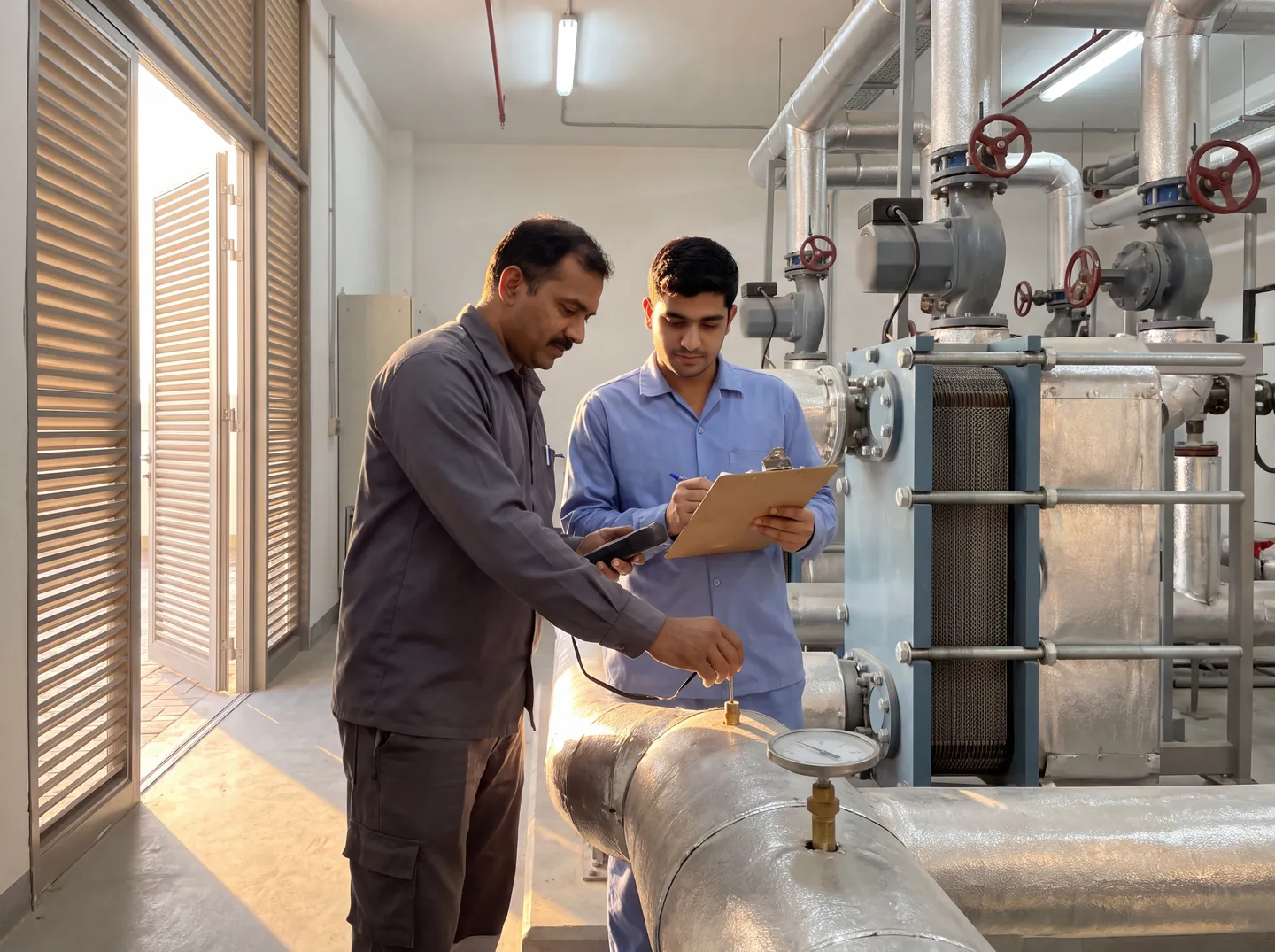
Does this charge warrant a supplier query or a maintenance visit, and what should the engineer check first?
How we would test it
Compare billed conditions with supply and return temperatures, flow and night-time demand. Your facilities team verifies the cause on site and authorises any repair.
Evidence & target
Stage: In design (no simulation figure is published; a first simulation on synthetic buildings did not pass in full because a strong engineer's analysis recovered more delta-T, and the first design does not detect open plant-room bypasses). Checks low delta-T and RD10 charges against your agreement (untested on real bills) and ranks night valve suspects. Proposed pilot target, signed beforehand: your engineer confirms on site at least 3 in 4 listed suspects, never padded (fewer than 4 listed are reported, not scored).
A first step (AED 0 upfront)
4-week bill and meter audit at AED 0 upfront on 12 monthly bills, your Cooling Services Agreement (with annexes and Schedule 3 rates), 1 month of provider meter data and 30 days of BMS trends. Zero hardware and zero BMS write access; any later pump tuning needs Chief Engineer approval with non-AI guards restoring settings if monitored humidity passes 55% or top-floor pressure drops.
Questions & regulatory scope
Common questions · Delta Guard (District cooling Low Delta-T bill & valve audit)
Designed to work with: BACnet & Modbus BMS CSVs · RSB Regulations RD04b, RD06 & RD10 · Provider BTU Meter Logs · Cooling Agreements
How can a Dubai building owner audit district cooling Low Delta-T charges?
By checking 12 monthly bills and provider meter readings against your Cooling Services Agreement and RSB regulations RD04b (9 °C cap, sole-fault proof and 3-month cure on post-July 2023 agreements) and RD10, alongside ranking night-time secondary-valve suspects from BMS flow and temperature trends.
What are the main limits of Delta Guard's first design?
It has not yet been tested on real bills, its first design does not detect open plant-room bypasses, hospitals were not in the synthetic building set, and in simulation a tuned fault-detection tool met the three-in-four precision target almost as often.
Does the 4-week audit touch our live BMS or guest comfort?
No. The 4-week audit is strictly read-only on historical bills and CSV exports with zero BMS write access. Any later pump tuning requires your Chief Engineer's approval and fixed rules outside the AI that restore settings if monitored indoor humidity passes 55%.
Ask in writing. We send our mutual NDA and a 30-minute read-only data checklist, and the audit runs offline on the exports you choose. No call is needed.
Your request is ready to sendNot sent yet
Copy it into an email to your contact at Nodal, the person who shared this page with you. An engineer replies in writing.One click opens your email with the request filled in. You can also copy it and send it to this address.We could not send it from this page just now. Your request is below, ready to copy.